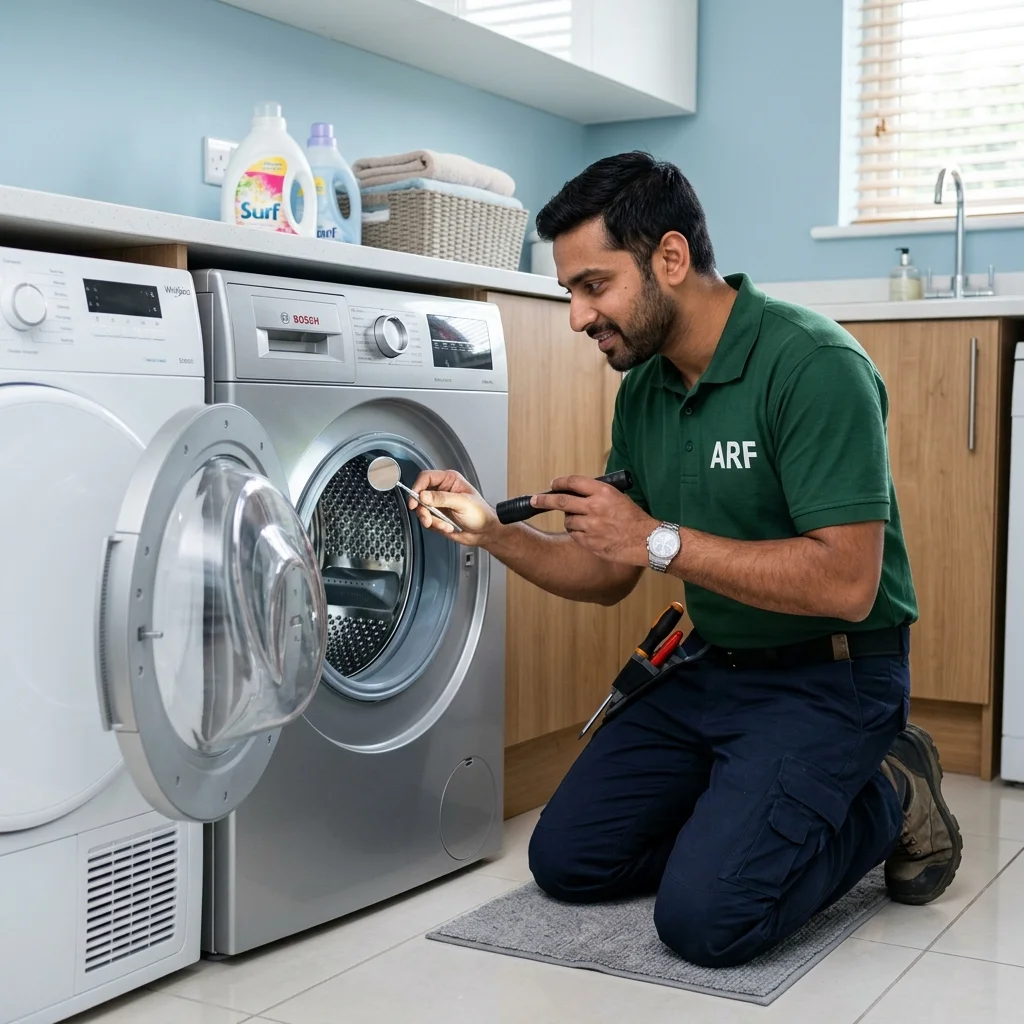
F11 appears when the machine cannot drain. On most Miele models the drain filter sits behind a flap at the bottom front, and it traps buttons, coins and lint. If the filter is clean, the drain pump or the non-return valve may be blocked. We clear or replace the pump and test a full drain and spin cycle.
F10 means water is not entering fast enough. Check that the stopcock is open and the hose is not kinked. Miele machines with the Waterproof System (WPS) have a safety valve on the inlet hose, and if it trips after a leak, the machine will not fill until the cause is repaired.
TwinDos pumps two-phase detergent from cartridges. If a cartridge is not seated properly or a dosing pump is blocked, the machine stops dosing. Cleaning the connectors and checking the pumps usually solves it.
Miele machines reward careful diagnosis:
- We note the F code and the program in use, and read the model and serial number from the rating plate behind the service flap.
- For F11, we drain the drum through the drain filter and check the filter, pump and non-return valve.
- For F10, we check the stopcock, the inlet hose and the Waterproof System valve, then the inlet valve itself.
- TwinDos cartridges and dosing pumps are checked if dosing is involved.
- After the repair, a test wash confirms filling, heating, draining and spinning.
Miele designs its washing machines for a very long working life, with a stainless-steel tub, a honeycomb drum and heavy-duty bearings. A Miele that is eight or ten years old is usually only part-way through its design life. Replacing a drain pump, heater, door lock or inlet valve costs a small fraction of a new Miele, so repair is the better choice in nearly every case.